


How Are ATEX Fans Designed And Built?
SPECIFYING THE BEST ATEX FAN FOR YOUR APPLICATION
ATEX and IECEx clearly stipulate the requirements for explosion-proof fans – but that does not necessarily guarantee that all Ex-fans are made equal. Quality and consistency levels differ between Ex-fan manufacturers.
Safety is paramount in this important area of fan engineering. Failure is not an option so you need to choose your specialist Ex-fan supplier carefully. Technical expertise and extensive experience are critical.
How Are ATEX Fans Designed And Built?
SPECIFYING THE BEST ATEX FAN FOR YOUR APPLICATION
ATEX and IECEx clearly stipulate the requirements for explosion-proof fans – but that does not necessarily guarantee that all Ex fans are made equal. Quality and consistency levels differ between Ex fan manufacturers.
Safety is paramount in this important area of fan engineering. Failure is not an option – the human, economic and reputational costs of getting it wrong are unthinkable. So you need to choose your specialist Ex fan supplier carefully. Technical expertise and extensive experience are critical.
ATEX AND IECEX DIRECTIVE AND OTHER RELEVANT STANDARDS
ACI’s explosion-proof fans comply with the following directives and standards:
Governing Directives
ATEX 2014-34-EU – The European ATEX Product Directive.
2006/42/EC – The European Machinery Directive.
IECEx 02 – IEC System for Certification to Standards Relating to Equipment for Use in Explosive Atmospheres.
Relevant standards
EN ISO 80079-36:2016(Part 36: Non-electrical equipment for explosive atmospheres – Basic method and requirements).
EN ISO 80079-37:2016 (Part 37: Non-electrical equipment for explosive atmospheres – Non-electrical type of protection constructional safety ‘c’, control of ignition sources ‘b’, liquid immersion ‘k’).
EN 14986:2017 (Design of fans working in potentially explosive atmospheres).
Learn more about ATEX directives, hazardous area classifications and device groups.
ACI’s explosion-proof fans comply with the following directives and standards:
Governing Directives
- ATEX 2014-34-EU – The European ATEX Product Directive.
- 2006/42/EC – The European Machinery Directive.
- IECEx 02 – IEC System for Certification to Standards Relating to Equipment for Use in Explosive Atmospheres.
Relevant Standards
- EN ISO 80079-36:2016 (Part 36: Non-electrical equipment for explosive atmospheres – Basic method and requirements).
- EN ISO 80079-37:2016 (Part 37: Non-electrical equipment for explosive atmospheres — Non-electrical type of protection constructional safety ‘c’, control of ignition sources ‘b’, liquid immersion ‘k’).
- EN 14986:2017 (Design of fans working in potentially explosive atmospheres).
Find out more here about ATEX directives, hazardous area classifications and device groups.
HOW EX FANS PREVENT FIRES AND EXPLOSIONS IN HAZARDOUS ENVIRONMENTS
There are various ways in which the design and construction of ATEX fans helps to ensure safety in hazardous environments containing potentially explosive gas or dust…
EXPLOSION-PROOF CONSTRUCTION
ATEX fans are designed and built to be explosion-proof. ACI produces robust designs with reliable impeller locking methods for the power of the motor used. Correct liner materials prevent sparks or hot spots from forming in the unlikely event of an impeller becoming loose during operation, mitigating the risk of an ignition.
CONDUCTIVE AND ANTI-STATIC COATINGS
Conductive and anti-static coatings play a vital role in enhancing the safety of ATEX fans, preventing the build-up of static electricity – a significant concern in hazardous environments.
These coatings help to dissipate any static charges that may accumulate on the fan’s surfaces. This minimises the risk of sparks that could potentially ignite flammable atmospheres.
Conductive coatings are designed to create surfaces that do not generate sparks. This is particularly important in environments where even a small spark could lead to a catastrophic explosion. By ensuring that the fan’s surfaces are non-sparking, the risk of ignition is significantly reduced.
Conductive and anti-static coatings ensure that ATEX fans can operate safely in hazardous environments without introducing additional risks. This is crucial in industries such as chemical processing, oil/gas and mining, where the potential for explosive atmospheres is high.
SPECIALISED MOTORS
Motors used in ATEX fans are designed to minimise the risk of ignition. Non-sparking, flameproof, dust-tight motors are used in the fan design, based on the environment in which the unit is destined to operate.
Flameproof motors ensure that flames are not emitted from the motor during an internal ignition. Non-sparking motors are built to prevent arcs and sparks from forming internally.
DUST AND GAS PROTECTION
ATEX fans are designed to operate safely in environments where flammable gases, vapours, or combustible dust may be present. The correct fan assembly T ratings for both gas and dust are applied based on the ignition temperature of the gas or dust present in the environment (as advised by the customer at the quotation stage).
Motor thermistors are often present. These ensure the temperature of the motor does not exceed the stated T rating.
Inlet filters can be used to limit the ingress of dust into the fan. This dust could otherwise build up on the impeller, causing an imbalance – leading in turn to excessive vibration and subsequent premature component failure.

CHOOSE YOUR FAN
Search for industrial fans using our product selector
MATERIALS AND SPECIALIST CONSTRUCTION TECHNIQUES
At ACI, our engineers are meticulous in their design, construction and quality control inspection of ATEX fans – going above and beyond the methods employed by some other manufacturers.
Impeller clearances are checked during the build to ensure they comply with the minimum requirements specified on the drawings. Correct impeller mounting is achieved according to the power output of the motor. Appropriate liner material pairings are chosen to suit the environment to ensure that sparking or hot spots cannot be generated in the unlikely event of impeller contact.
Suitable construction materials are selected to ensure a chemical ignition source – such as a Thermite reaction – is not present. We also ensure that a galvanic couple is not present. This helps to prevent premature component failure.
Stress calculations are performed on impellers to ensure they can withstand the operating speeds for which they are intended. Temperature rises through the equipment are analysed to ensure the temperature class of the equipment is not affected. Customer fan process temperatures are evaluated to ensure the correct temperature class is applied to the equipment.
Ductile materials are selected where heat dissipation is required. Heat spinners are used to deflect elevated process temperatures away from the motor.
Paint data sheets are checked to ensure that chemical ignition sources cannot be introduced. Where paints are used over a certain thickness, warnings are added to the fan to instruct the end user of the potential for static build-up – and how to stop this from happening. Where plastics are used, similar warnings are added for the same reasons.
Vibration monitoring (as required by the standards) is offered for Cat 2D equipment.


Anti-static filter media are employed to prevent static build-up on the inlet of the fan.
PTFE seals are added to the inlet plates and/or inspection hatches. It is important to allow access for cleaning to prevent dangerous dust build-ups.s.
Anti-static hose is used for any flexible connections. Grounding points are added to any isolated metalwork, including motor pedestals with anti-vibration mounts and also flexible connection flanges.
Full earth bond continuity checks are performed across the extremities of every blower before it leaves ACI.
Consideration is given to the impact on the environment when selecting suitable materials. More environmentally friendly options are used whenever possible.
A comprehensive user manual is available. It highlights all risks, maintenance aspects and end-user responsibilities – including the Specific Conditions of Use based on the certification limitations.
MATERIALS AND SPECIALIST CONSTRUCTION TECHNIQUES
At ACI, our engineers are meticulous in their design, construction and quality control inspection of ATEX fans – going above and beyond the methods employed by some other manufacturers.
Impeller clearances are checked during the build to ensure they comply with the minimum requirements specified on the drawings. Correct impeller mounting is achieved according to the power output of the motor. Appropriate liner material pairings are chosen to suit the environment to ensure that sparking or hot spots cannot be generated in the unlikely event of impeller contact.
Suitable construction materials are selected to ensure a chemical ignition source – such as a Thermite reaction – is not present. We also ensure that a galvanic couple is not present. This helps to prevent premature component failure.
Stress calculations are performed on impellers to ensure they can withstand the operating speeds for which they are intended. Temperature rises through the equipment are analysed to ensure the temperature class of the equipment is not affected. Customer fan process temperatures are evaluated to ensure the correct temperature class is applied to the equipment.
Ductile materials are selected where heat dissipation is required. Heat spinners are used to deflect elevated process temperatures away from the motor.
Vibration monitoring (as required by the standards) is offered for Cat 2D equipment.
Paint data sheets are checked to ensure that chemical ignition sources cannot be introduced. Where paints are used over a certain thickness, warnings are added to the fan to instruct the end user of the potential for static build-up – and how to stop this from happening. Where plastics are used, similar warnings are added for the same reasons.
Anti-static filter media are employed to prevent static build-up on the inlet of the fan.
PTFE seals are added to the inlet plates and/or inspection hatches. It is important to allow access for cleaning to prevent dangerous dust build-ups.
Anti-static hose is used for any flexible connections. Grounding points are added to any isolated metalwork, including motor pedestals with anti-vibration mounts and also flexible connection flanges.
Full earth bond continuity checks are performed across the extremities of every blower before it leaves ACI.
Consideration is given to the impact on the environment when selecting suitable materials. More environmentally friendly options are used whenever possible.
A comprehensive user manual is available. It highlights all risks, maintenance aspects and end-user responsibilities – including the Specific Conditions of Use based on the certification limitations.
Air Control Industries
HOW RIGOROUS PART TRACEABILITY, TESTING AND CERTIFICATION GUARANTEE ATEX COMPLIANCE
ACI uses a notified body for its certification; this is currently the CSA Group. We apply for certification once a product has been fully designed in accordance with the appropriate standards.
Schematic drawings detail the fan types covered. They include any adaptations, accessories, clearances and many other details relating to how the requirements of the applicable standards have been covered.
Ignition Hazard Assessments (IHAs) are performed on any new equipment that is added to our certificate. The notified body issues the certificate once all pertinent points have been satisfied.
Generally, once the certificate has been acquired there is no further need to apply again. If anything needs to change in relation to what is held on the drawings or the detail on the certificate, a variation request is submitted to the notified body and a case is opened to ensure this is done officially and correctly.
ACI currently maintains three certificates: ATEX, IECEx and UKEX. These certificates have expiry dates and require renewal periodically. The CSA Group visits to audit our processes between renewal dates.
There is full traceability of all materials used in the construction of the equipment. Material certificates – such as those for the metals used in the fabrication of a fan case – are held at ACI.
Full motor documentation is forwarded on to the end customer for reference, along with user manuals of any other suppliers’ integrated equipment.
We designate separate part numbers to our stock for use in Ex builds to ensure that non-Ex parts are kept separate. This stops parts that do not have full material certification from entering an Ex build.
We have also invested heavily in a segregated Ex build area, along with an adjoining segregated store specifically for parts for use in Ex builds.
Watch our video
Get expert technical advice
We can create a solution tailor-made to your exact requirements – but we’ll use off-the-shelf components so the price remains sensible. That will enable you to realise a quicker return on your investment.
Why ACI?

50+ years of technical expertise and experience.

World-class solutions – US (Maine) subsidiary. Distributors, agents and partners in 40+ countries.

Performance guaranteed – all standard and custom systems will perform as tested and specified. Guaranteed results and savings.

Advanced quieter air blowers that take up less space.

US designed and manufactured equipment.

Thousands of happy customers across the world.
Get expert technical advice on ATEAX and IECEx FANS
Contact ACI for expert technical guidance on specifying ATEX and IECEx fans for explosive atmospheres. Our engineers can help you to specify fans that meet all your safety, output and efficiency requirements.
WHY ACI?
- 50+ years of technical expertise and experience.
- World-class solutions – US (Maine) subsidiary. Distributors, agents and partners in 40+ countries.
- Performance guaranteed – all standard and custom systems will perform as tested and specified. Guaranteed results and savings.
- Thousands of happy customers across the world.
- Superior laminar airflow and entrainment: faster, more efficient and cost-effective air systems.
- Advanced quieter air blowers that take up less space.
- UK designed and manufactured equipment.
- ISO 9001, ISO 14001, CE, UKEX and IECEx certified.
- UK distributor for leading fan/blower manufacturers Euroventilatori, ebm-papst and Ital Blowers.
DON’T MISS THESE RELATED ARTICLES
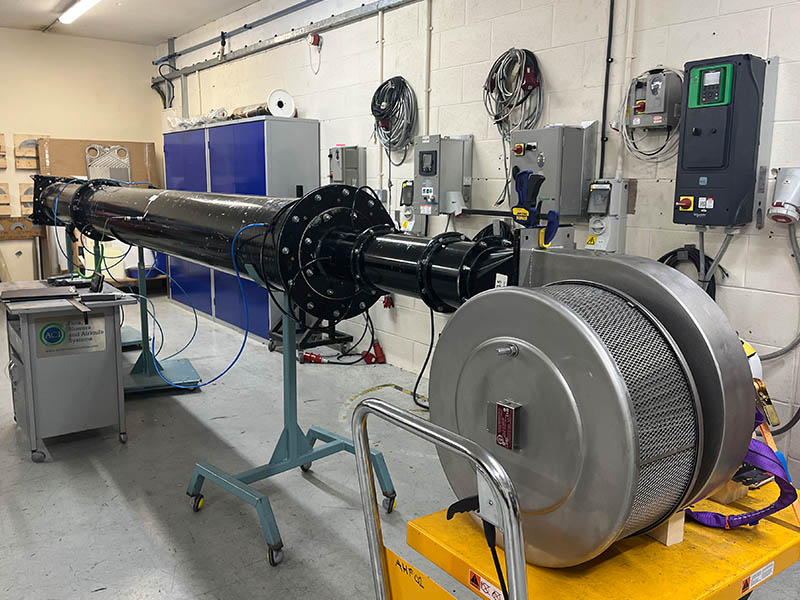
What is ATEX Fan?
Understanding the pivotal role of ATEX Fans in hazardous environments

STAYING AHEAD OF SAFETY STANDARDS
ACI successfully underwent official updates of ATEX, IECEx and UKEX certifications.

ATEX VS IECEX – A QUESTION OF STANDARDS
Understanding the certifications and the importance of independent testing and self-certification.
DON’T MISS THESE RELATED ARTICLES
What is ATEX Fan?
Understanding the pivotal role of ATEX Fans in hazardous environments
STAYING AHEAD OF SAFETY STANDARDS
ACI successfully underwent official updates of ATEX, IECEx and UKEX certifications.
ATEX VS IECEX – A QUESTION OF STANDARDS
Understanding the certifications and the importance of independent testing and self-certification.